ROOTED HERE
The history of Sugar Land
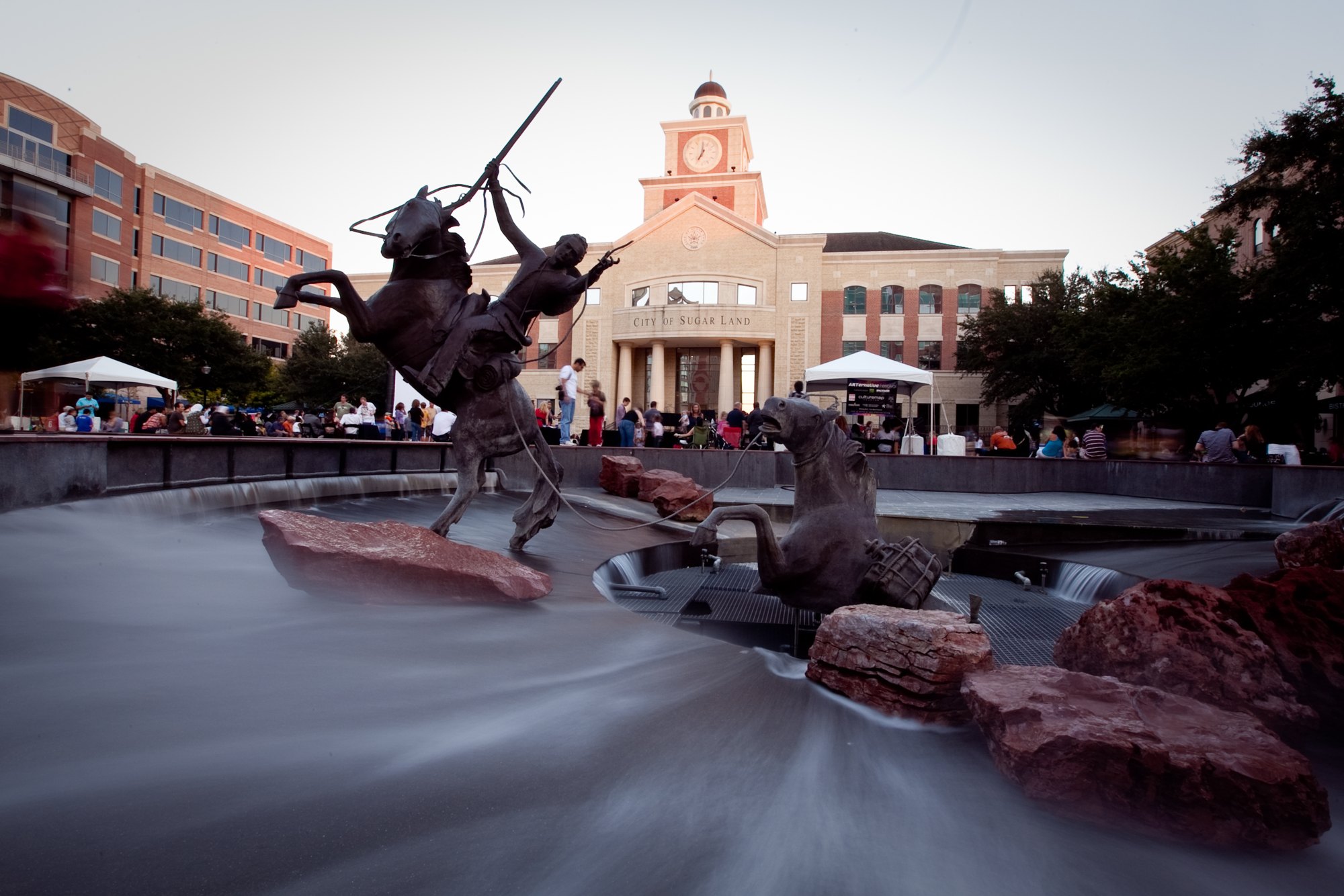
Sugar Land grew from an Imperial Sugar company town into a city of distinct communities. Town Square, First Colony and Telfair provide different starting points for restaurants, independent shops and public spaces.
People who shaped Sugar Land
These milestones are an introduction, not a complete local history. Follow the linked city and museum sources to explore the people and places behind them.Read the local historical account.
Watch the city’s history

FROM THE ARCHIVES
181 Years: From Mexican Land Grant to Incorporated City | The Story of Sugar Land, Texas
The Sugar Land Heritage Foundation traces the community from a Mexican land grant through plantation and company-town history to incorporation.
Watch on YouTube ↗Famous people born in Sugar Land
See all 17 famous people


- 1838
Oakland Plantation
Nathaniel and Matthew Williams operated Oakland Plantation along Oyster Creek, growing cotton, corn and sugar cane. Plantation labor and sugar production underpinned the settlement that later became Sugar Land.
Sugar Land Heritage Foundation: Bettye Anhaiser timeline ↗ - 1843
Cane processing begins
Nathaniel and Matthew Williams began processing sugar cane at Oakland Plantation. Their early operation used a horse-powered mill and kettles heated in the open air.
Texas Historical Commission: Sugar Land marker ↗ - 1853–1858
The Sugar Land name
Benjamin Franklin Terry and William Jefferson Kyle bought the plantation in 1853 and renamed it Sugar Land. A rail connection supported shipments, and a post office followed in 1858.
Sugar Land Heritage Foundation: Bettye Anhaiser timeline ↗ - 1890s
Refinery and Sugar Land Railroad
E. H. Cunningham assembled more than 12,000 acres and invested in a refinery, a new raw-sugar mill, a paper mill and the 14-mile Sugar Land Railroad. Sugar Land became one of the line's stations.
Handbook of Texas Online ↗ - 1908
A refinery-centered company town
Isaac H. Kempner and William T. Eldridge acquired the refinery and surrounding property. Housing, schools, shops and medical services developed around the sugar business, shaping everyday life for workers and their families.
Sugar Land Heritage Foundation: Bettye Anhaiser timeline ↗ - 1913
Levees around the company town
The sugar company constructed eight miles of levees and twenty miles of drainage ditches. Flood protection was an important part of maintaining the industrial community beside the Brazos River.
Sugar Land Heritage Foundation: Bettye Anhaiser timeline ↗ - 1917
The Sugar Land Auditorium
Imperial Sugar Company engineer M. R. Wood designed the Mission Revival auditorium as the center of an eleven-building school complex. Long used for films, plays and graduations, it became a Recorded Texas Historic Landmark in 1992.
Texas Historical Commission: Sugar Land Auditorium marker ↗ - 1959
Residents choose a city
Following sales of company homes to employees, Sugar Land incorporated. On December 15, residents elected the first mayor and five aldermen, establishing local government separate from the company.
Sugar Land Heritage Foundation: Bettye Anhaiser timeline ↗ - 1980s
Suburban growth
Development spreading from Houston transformed the former company town. Sugar Land grew from about 4,200 residents in 1980 to nearly 14,900 by 1988, and local businesses multiplied.
Handbook of Texas Online ↗ - 2025
The city buys the Imperial site
The City of Sugar Land acquired the roughly 40-acre Imperial Historic District, including the former refinery's Char House. It was the first time the city had owned the property, opening a path for preservation and redevelopment.
City of Sugar Land ↗
See the history for yourself.
Check current opening hours and visitor information before you go: Sugar Land Town Square.
For local services and public information, the local government website is a starting point. For historical research, consult local libraries, archives and museums and check collection-specific image permissions.
Selected milestones from the linked historical sources. This is an introduction, not a complete account of the city’s history.